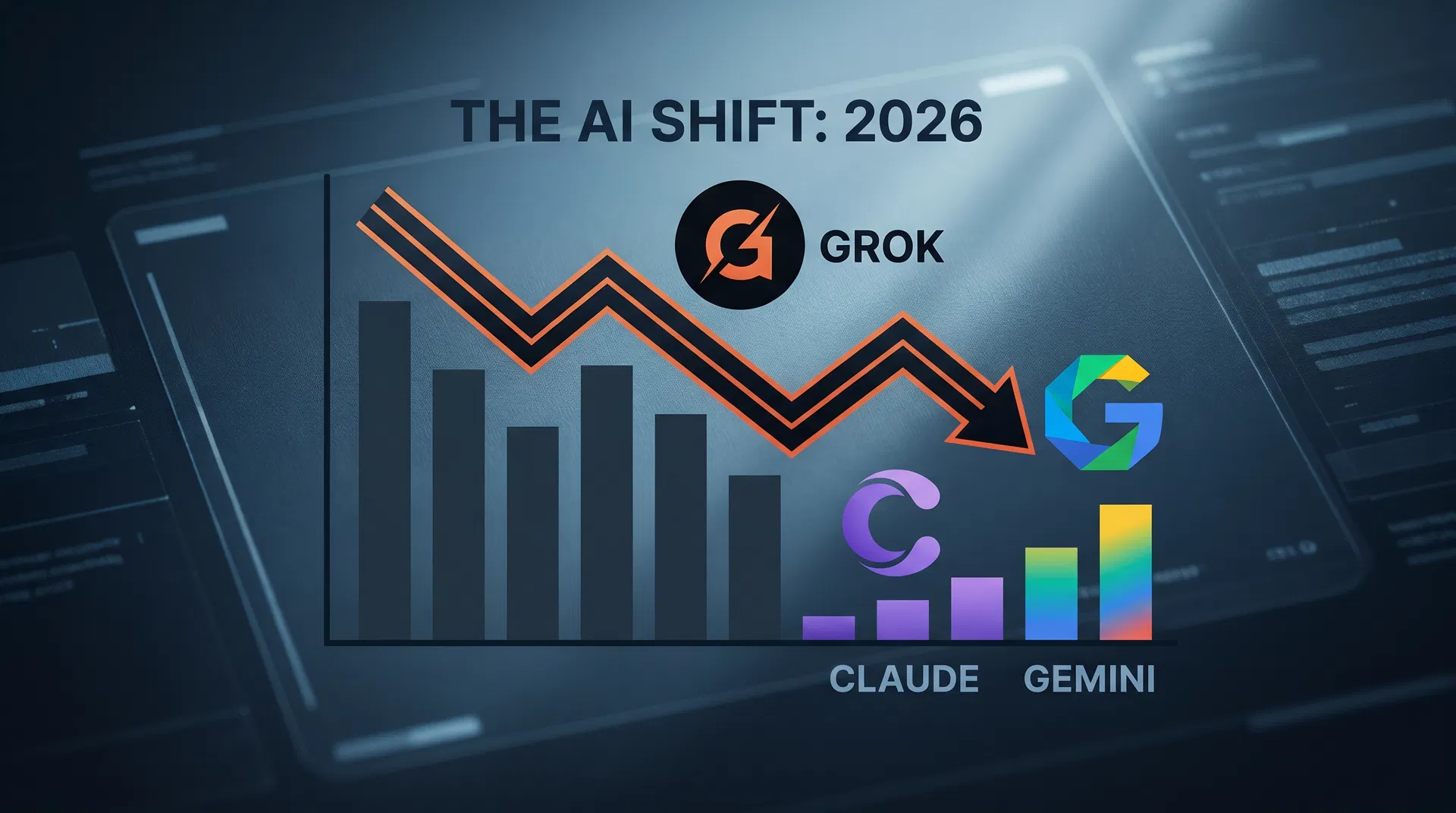
•BREAKING: OpenAI GPT-5.5 Instant is now the default ChatGPT model — 52.5% fewer hallucinations on high-stakes topics; new memory sources feature shows users exactly what context shaped their responses•BREAKING: Grok falls to 5th place in AI chatbot rankings — Claude surges 1,205% year-over-year as xAI loses 80+ staff and faces App Store removal threat over explicit image controversy•BREAKING: Five major publishers sue Meta over Llama — Hachette, Macmillan allege millions of books pirated for AI training; model can reproduce verbatim passages•BREAKING: Trump administration strikes AI safety deals with Google DeepMind, Microsoft, and xAI — pre-release model review extended to three more major labs•BREAKING: Anthropic deploys 10 AI agent templates for Wall Street — Claude Opus 4.7 leads Finance Agent benchmark at 64.37%, now integrates with Excel, PowerPoint, Word, and Outlook•BREAKING: Trump White House weighs executive order to vet AI models before release — Anthropic's Mythos model reportedly triggered the policy reversal•BREAKING: IBM Think 2026 — watsonx Orchestrate repositioned as agentic control plane, IBM Bob reaches GA, Concert Secure Coder embeds security in developer workflow•BREAKING: WEF report — 94% of cyber leaders say AI is defining force in cybersecurity; strategic AI adopters cut breach costs by $1.9M and shorten lifecycle by 80 days•BREAKING: 2026 cyberattack analysis — 17-year-old breached 7M records to buy Pokemon cards; time-to-exploit collapsed from 700 days in 2020 to just 44 days in 2025•BREAKING: MIT Technology Review — AI is becoming the primary interface for democratic participation, but institutions were not designed for this world•BREAKING: Pentagon signs AI military deals with OpenAI, Google, Nvidia, Microsoft, Amazon, SpaceX, and Reflection AI — Anthropic refuses, sues over autonomous weapons concerns•BREAKING: May Day 2026 — labor movement faces existential threat as Amazon plans to replace 500,000+ jobs with robots and AI automation•BREAKING: AI research undergoes great pivot — focus shifts from model-centric breakthroughs to system-level deployment and autonomous scientific discovery•BREAKING: Northwestern study reveals AlphaFold2 expanded structural biology rather than replacing it — human-AI collaboration model offers template for future•BREAKING: PNNL scientists use machine learning to optimize nuclear waste vitrification at Hanford — could save hundreds of millions and reduce project timeline by years•BREAKING: Meta raises AI capex to $125-145B, Google to $180-190B — trillion-dollar question: is the spending actually working?•BREAKING: OpenAI launches GPT-5.5 agentic AI — AWS and Databricks announce managed agent services powered by GPT-5.5•BREAKING: IBM launches Bob, end-to-end SDLC AI platform — $20/month Pro tier, multi-model orchestration, enterprise governance•BREAKING: Roblox Indonesia implements mandatory facial scanning for users under 16 — privacy advocates raise concerns•BREAKING: DW investigation: AI industry burning trillions with no clear path to profitability — financial analysts warn of bubble•BREAKING: Microsoft drops exclusive OpenAI license — OpenAI now free to work with Amazon, Google, and any cloud provider•BREAKING: China blocks Meta's $2B Manus acquisition — Beijing orders deal unwound in major cross-border AI tech ruling•BREAKING: Musk vs. Altman trial begins — nine-person jury seated in Oakland, $134B OpenAI lawsuit opens Tuesday•BREAKING: Big Tech's $600B AI earnings reckoning — Alphabet, Microsoft, Meta, Amazon all report Wednesday•BREAKING: OpenAI proposes 4-day workweek, robot tax, and public AI wealth fund in sweeping economic policy blueprint•BREAKING: Congress racing to reform FISA Section 702 before AI supercharges warrantless surveillance of Americans•BREAKING: Google reveals 75% of all new code is now AI-generated — up from just 25% eighteen months ago•BREAKING: Google Gemini April Drop: native Mac app, AI music creation with Lyria 3 Pro, and Notebooks go live•BREAKING: Forbes AI 50 released — OpenAI leads at $182.6B funding, but vertical specialists are the real story•BREAKING: BCA Research warns AI trade entering 1999-style melt-up — S&P 500 could hit 9,200 before correction•BREAKING: OpenAI GPT-5.5 Instant is now the default ChatGPT model — 52.5% fewer hallucinations on high-stakes topics; new memory sources feature shows users exactly what context shaped their responses•BREAKING: Grok falls to 5th place in AI chatbot rankings — Claude surges 1,205% year-over-year as xAI loses 80+ staff and faces App Store removal threat over explicit image controversy•BREAKING: Five major publishers sue Meta over Llama — Hachette, Macmillan allege millions of books pirated for AI training; model can reproduce verbatim passages•BREAKING: Trump administration strikes AI safety deals with Google DeepMind, Microsoft, and xAI — pre-release model review extended to three more major labs•BREAKING: Anthropic deploys 10 AI agent templates for Wall Street — Claude Opus 4.7 leads Finance Agent benchmark at 64.37%, now integrates with Excel, PowerPoint, Word, and Outlook•BREAKING: Trump White House weighs executive order to vet AI models before release — Anthropic's Mythos model reportedly triggered the policy reversal•BREAKING: IBM Think 2026 — watsonx Orchestrate repositioned as agentic control plane, IBM Bob reaches GA, Concert Secure Coder embeds security in developer workflow•BREAKING: WEF report — 94% of cyber leaders say AI is defining force in cybersecurity; strategic AI adopters cut breach costs by $1.9M and shorten lifecycle by 80 days•BREAKING: 2026 cyberattack analysis — 17-year-old breached 7M records to buy Pokemon cards; time-to-exploit collapsed from 700 days in 2020 to just 44 days in 2025•BREAKING: MIT Technology Review — AI is becoming the primary interface for democratic participation, but institutions were not designed for this world•BREAKING: Pentagon signs AI military deals with OpenAI, Google, Nvidia, Microsoft, Amazon, SpaceX, and Reflection AI — Anthropic refuses, sues over autonomous weapons concerns•BREAKING: May Day 2026 — labor movement faces existential threat as Amazon plans to replace 500,000+ jobs with robots and AI automation•BREAKING: AI research undergoes great pivot — focus shifts from model-centric breakthroughs to system-level deployment and autonomous scientific discovery•BREAKING: Northwestern study reveals AlphaFold2 expanded structural biology rather than replacing it — human-AI collaboration model offers template for future•BREAKING: PNNL scientists use machine learning to optimize nuclear waste vitrification at Hanford — could save hundreds of millions and reduce project timeline by years•BREAKING: Meta raises AI capex to $125-145B, Google to $180-190B — trillion-dollar question: is the spending actually working?•BREAKING: OpenAI launches GPT-5.5 agentic AI — AWS and Databricks announce managed agent services powered by GPT-5.5•BREAKING: IBM launches Bob, end-to-end SDLC AI platform — $20/month Pro tier, multi-model orchestration, enterprise governance•BREAKING: Roblox Indonesia implements mandatory facial scanning for users under 16 — privacy advocates raise concerns•BREAKING: DW investigation: AI industry burning trillions with no clear path to profitability — financial analysts warn of bubble•BREAKING: Microsoft drops exclusive OpenAI license — OpenAI now free to work with Amazon, Google, and any cloud provider•BREAKING: China blocks Meta's $2B Manus acquisition — Beijing orders deal unwound in major cross-border AI tech ruling•BREAKING: Musk vs. Altman trial begins — nine-person jury seated in Oakland, $134B OpenAI lawsuit opens Tuesday•BREAKING: Big Tech's $600B AI earnings reckoning — Alphabet, Microsoft, Meta, Amazon all report Wednesday•BREAKING: OpenAI proposes 4-day workweek, robot tax, and public AI wealth fund in sweeping economic policy blueprint•BREAKING: Congress racing to reform FISA Section 702 before AI supercharges warrantless surveillance of Americans•BREAKING: Google reveals 75% of all new code is now AI-generated — up from just 25% eighteen months ago•BREAKING: Google Gemini April Drop: native Mac app, AI music creation with Lyria 3 Pro, and Notebooks go live•BREAKING: Forbes AI 50 released — OpenAI leads at $182.6B funding, but vertical specialists are the real story•BREAKING: BCA Research warns AI trade entering 1999-style melt-up — S&P 500 could hit 9,200 before correction•BREAKING: OpenAI GPT-5.5 Instant is now the default ChatGPT model — 52.5% fewer hallucinations on high-stakes topics; new memory sources feature shows users exactly what context shaped their responses•BREAKING: Grok falls to 5th place in AI chatbot rankings — Claude surges 1,205% year-over-year as xAI loses 80+ staff and faces App Store removal threat over explicit image controversy•BREAKING: Five major publishers sue Meta over Llama — Hachette, Macmillan allege millions of books pirated for AI training; model can reproduce verbatim passages•BREAKING: Trump administration strikes AI safety deals with Google DeepMind, Microsoft, and xAI — pre-release model review extended to three more major labs•BREAKING: Anthropic deploys 10 AI agent templates for Wall Street — Claude Opus 4.7 leads Finance Agent benchmark at 64.37%, now integrates with Excel, PowerPoint, Word, and Outlook•BREAKING: Trump White House weighs executive order to vet AI models before release — Anthropic's Mythos model reportedly triggered the policy reversal•BREAKING: IBM Think 2026 — watsonx Orchestrate repositioned as agentic control plane, IBM Bob reaches GA, Concert Secure Coder embeds security in developer workflow•BREAKING: WEF report — 94% of cyber leaders say AI is defining force in cybersecurity; strategic AI adopters cut breach costs by $1.9M and shorten lifecycle by 80 days•BREAKING: 2026 cyberattack analysis — 17-year-old breached 7M records to buy Pokemon cards; time-to-exploit collapsed from 700 days in 2020 to just 44 days in 2025•BREAKING: MIT Technology Review — AI is becoming the primary interface for democratic participation, but institutions were not designed for this world•BREAKING: Pentagon signs AI military deals with OpenAI, Google, Nvidia, Microsoft, Amazon, SpaceX, and Reflection AI — Anthropic refuses, sues over autonomous weapons concerns•BREAKING: May Day 2026 — labor movement faces existential threat as Amazon plans to replace 500,000+ jobs with robots and AI automation•BREAKING: AI research undergoes great pivot — focus shifts from model-centric breakthroughs to system-level deployment and autonomous scientific discovery•BREAKING: Northwestern study reveals AlphaFold2 expanded structural biology rather than replacing it — human-AI collaboration model offers template for future•BREAKING: PNNL scientists use machine learning to optimize nuclear waste vitrification at Hanford — could save hundreds of millions and reduce project timeline by years•BREAKING: Meta raises AI capex to $125-145B, Google to $180-190B — trillion-dollar question: is the spending actually working?•BREAKING: OpenAI launches GPT-5.5 agentic AI — AWS and Databricks announce managed agent services powered by GPT-5.5•BREAKING: IBM launches Bob, end-to-end SDLC AI platform — $20/month Pro tier, multi-model orchestration, enterprise governance•BREAKING: Roblox Indonesia implements mandatory facial scanning for users under 16 — privacy advocates raise concerns•BREAKING: DW investigation: AI industry burning trillions with no clear path to profitability — financial analysts warn of bubble•BREAKING: Microsoft drops exclusive OpenAI license — OpenAI now free to work with Amazon, Google, and any cloud provider•BREAKING: China blocks Meta's $2B Manus acquisition — Beijing orders deal unwound in major cross-border AI tech ruling•BREAKING: Musk vs. Altman trial begins — nine-person jury seated in Oakland, $134B OpenAI lawsuit opens Tuesday•BREAKING: Big Tech's $600B AI earnings reckoning — Alphabet, Microsoft, Meta, Amazon all report Wednesday•BREAKING: OpenAI proposes 4-day workweek, robot tax, and public AI wealth fund in sweeping economic policy blueprint•BREAKING: Congress racing to reform FISA Section 702 before AI supercharges warrantless surveillance of Americans•BREAKING: Google reveals 75% of all new code is now AI-generated — up from just 25% eighteen months ago•BREAKING: Google Gemini April Drop: native Mac app, AI music creation with Lyria 3 Pro, and Notebooks go live•BREAKING: Forbes AI 50 released — OpenAI leads at $182.6B funding, but vertical specialists are the real story•BREAKING: BCA Research warns AI trade entering 1999-style melt-up — S&P 500 could hit 9,200 before correction